Cinema feels like home, whether it depicts the interior of Canadian housing or the Egyptian nightlife. This piece is going to cover short films from both Short Cuts and Wavelengths programmes.
The second Wavelengths shorts programmes calls itself Into the Blue, which I think is about depression and exploration. The first short in that programme is I Saw The Face of God in the Jet Wash from director Mark Jenkin. Jenkin’s narration is doing a lot of the heavy lifting here, but he seems sincere as he sees home everywhere. Representing everywhere are the 16mm footage of places like the Isle of Man, Brittany, and California. These are places that he goes to as a filmmaker who gets invited to festivals, and he still gets to travel and feel inspiration everywhere.
Another remarkable short in this Wavelengths programme is Daria’s Night Flowers, from Iranian director Maryam Tafakory. It combines clips from films starring Leila Hatami and other stars from cinema from Iran during the 1990s. In one clip, a man threatens to chop his wife’s arm, while another shows pictures of flowers that have seeds that can affect people mentally. We know about the seeds because of the narration. That narration tells the story of a man burning his queer wife’s manuscript. Brahkage-y effects in palimpsest in short that beautifully subverts gender norms.
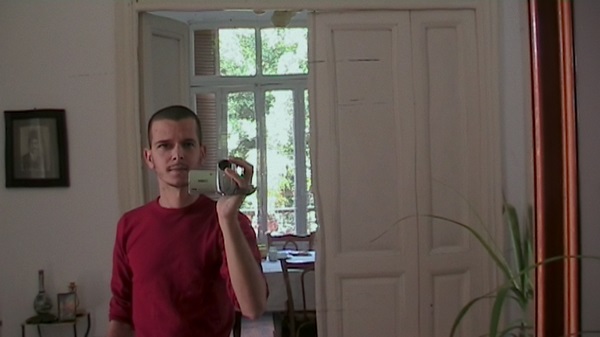
Last on the programme is Cairo Streets, where director Abdellah Taïa takes viewers back to 2007, using an old camera to depict the old city. A Moroccan citizen, he’s in town to work with famed Egyptian director Youssef Chahine, but that’s not all he’s doing. He’s also looking for an old lover and a lot of things can happen as to why they lost touch. The use of the old camera and footage here reflects the ephemeral nature of queer love. This is especially true in the Global south. Maybe the medium reflects the message too much or that the male gaze is too strong. But I’m giving this the benefit of the doubt.
Courtesy of TIFF
The fest takes viewers out of the blue and into the last Wavelengths shorts programme which it calls Slightest Pretense, and no, I will not make that joke. From Egypt, this new programme takes us to Tunisia with Fredj Moussa’s Land of Barbar. It bookends itself with narration, a Global South spin on the Decamaron, about a Roman woman’s bittersweet emotions. She’s happy she’s across the Mediterranean but unhappy that she’s alive. Between those pieces of narration is a pure visual feast, showing an anachronistic version of North African shores. Hints of Parajanov also flash on screen, reminding us of historical elasticity.
From then, the programme reminds us that cinema should challenge its viewers, for better or for worse. From Austria, the programme takes us to the other side of the Mediterranean and into the Danube, with Bjorn Kammerer’s Conference. This short, clocking in at almost nine minutes, just shows three men gathering around a fire, looking at said fire. The first half makes one think that yes, we’re in the thick of Wavelengths, but again, benefit of the doubt. Halfway through, they stop looking at the fire and start looking at each other, Leone style. One can even see a modern interpretation of the Prometheus myth here as we watch these men’s increasing awareness.
Conference is the end of the Wavelengths shorts for me and now I’m moving on to Short Cuts. If I had to think of a theme for the sixth programme, it’d say it’s about the relationship between men and gods. Or about human loneliness. The first short in the programme, Divers, reminds me of that theme as it shows young and fit athletes before they dive into a pool. Some are preparing like regular divers, but one is breathing in and out to prep himself. Beauty is an aspect that cinema usually celebrates, even though beauty can be mundane. But there’s something respectful about the way that the short captures its subjects who are in their prime.
Courtesy of TIFF
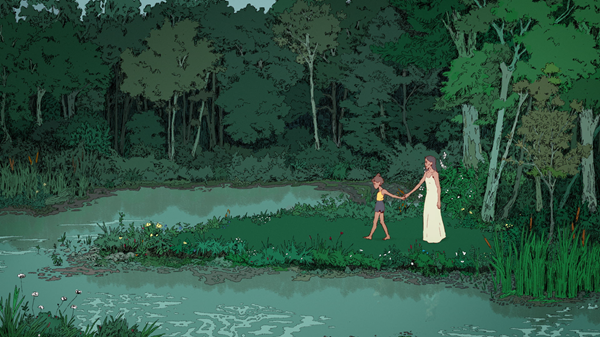
Eva Lusbaronian’s Death of a Fish is maybe about a goddess but let’s call her an entity. A young woman and a feminine entity mourn when a bird snatches a fish from a lake, only for that fish to spit it out. All of the short uses old school animation. However, the depiction of contemporary dance makes me think that there’s some motion capture involved in this as well. I love some contemporary dance and old school animation, but the message of the short is iffy. Maybe if humans were killing the fish is one thing but this is just the cycle of life. But then ending makes me realize that it’s alright to mourn death even if it is an inevitability for most of us.
The protagonist in A Soft Touch, from director Heather Young, has mobility issues, but she can still have a full day. After one of those full days, the protagonist, a senior, takes one of the few medications she needs. She also texts a woman named Diane. This Diane owes our protagonist money and we all know that she’s not going to get her money back, forcing her to make a decision that she shouldn’t have to. A part of me is cautious towards this short because of how it toes the line of realism and exploitation. But it reminds us that seniors don’t have access to benefits the way we think they do. The visual story telling here also competently conveys this character’s life.
A Soft Touch deals with loneliness and Dana Solomon’s Niimi deals with the same themes as it depicts its protagonist’s life. This time, Kali Kennedy plays a sexual assault survivor who rents out a dance studio, doing her best to get back to form. Something interesting happens after her booked time though. An Anishinaabe, she dances contemporary. And she discovers that a fellow Anishinaabe (Solomon) has the time slot after her, teaching sexy hip hop to her students. The visual language is ambiguous a bit in the beginning but it gets stronger afterwards. What helps is the performance we see out of Kennedy, who shows her character’s growth through her movements.
- Rated: Unrated
- Genre: Documentary
- Release Date: 9/10/2025
- Directed by: Abdellah Taïa, Heather Young, Mark Jenkin
- Produced by: Sophie Penson
- Studio: Barney Production, Houseplant Films