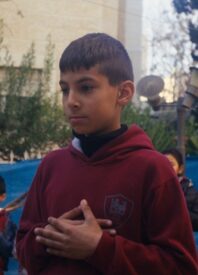
It’s difficult to imagine ‘normal’ Palestinian life, but nonetheless, House of Hope shows that semblance of normalcy through Manar and Milad. As parents, they try to give their children nutritious food.
Manar and Milad are teachers, educating the few children within their care, and their approach seems normal, like morning rituals when Milad greets children. At the gate, he uses his words to ensure that every child feels beautiful or like a champion. The children get another ‘good morning’ after they sing the Palestinian national anthem.
The difference comes when the classes start, as Milad teaches what sounds like behavioural mitigation, as one of the children repeats something hr probably taught them beforehand. “Our laughter is a force, it’s a part of our resilience,” one of Manar’s core philosophies.
My Hot Docs coverage this year is admittedly slower this year, and most of the documentaries I’m watching capture life in West Asia, depicting subjects living two lives. In House of Hope, director Marjorlein Busstra captures Manar and Milad’s ‘two lives’ competently.
On one hand, it shows Milad giving these children a sense of wonder, as House of Hope shows how she accomplishes this through cooking with them. That scene cuts to night time when she talks to her friends/ fellow staff at the school where dynamics are fluid.
In that scene in House of Hope, the friend apologizes, while Manar talks about being better with the children. In fairness to both, it’s difficult to get it together and be an adult in any country, and it’s probably harder to do that under occupation. The film reinforces the Palestinian new normal through its observational approach. For example, the children draw rockets is heartbreaking, making viewers hope that they’ll grow up free.
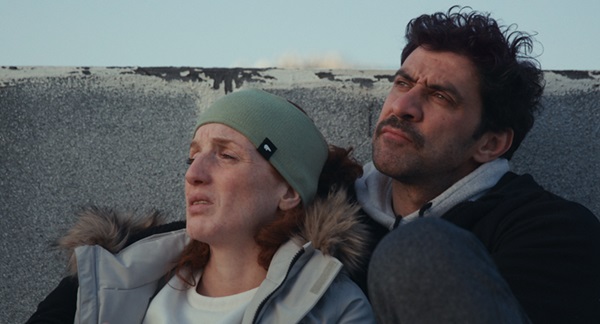
The filmmakers gave Hot Docs permission to publish this photo.
- Rated: Unrated
- Genre: Documentary
- Release Date: 4/30/2026
- Directed by: Marjolein Busstra
- Produced by: May Jabareen, Olivia Sophie van Leeuwen, Ossama Bawardi, Ruby Deelen
- Studio: 100% Docs