Even good deeds have a cost…
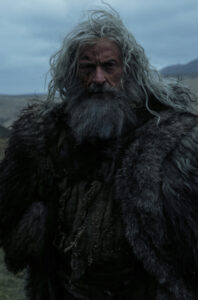
Death of Robin Hood is a mood and introspective affair about a man haunted by the moral and psychological tolls that his previous life took from him. Anyone looking for echoes of Errol Flynn or Kevin Costner may want to turn back now as leading man Hugh Jackman gives us the best performance we’ve seen from him in practically a decade.
Grappling with his past after a life of crime and murder, Robin Hood (Hugh Jackman) finds himself gravely injured after a battle he thought would be his last. In the hands of a mysterious woman, he is offered a chance at salvation.
Hardly a story worth telling around a campfire, Death of Robin Hood is a grim and tortured affair from a man who needs to escape the violence and chaos that he left in his wake as a younger man and the torture of coming to terms with your guilt.
Writer/Director Michael Sarnoski comes back here after his jaunt into franchise filmmaking with a film that allows us to examine the grim nature of what drives a man to be stuck in a purgatory of survival because he knows the only way he can resolve the sins and crimes of his past is to ultimately pay for them.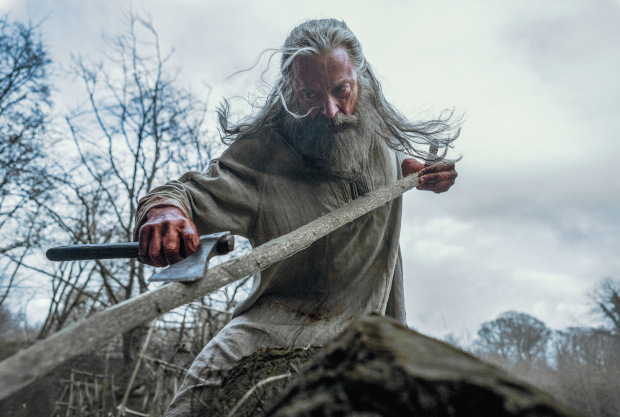
Washed in the grim backdrop of Northern Ireland, Sarnoski gives us a portrait of a man who isn’t necessarily trying to revise his past, yet he’s matured to the point that he knows he’s stuck in them, looking for some kind of path to redemption.
Admittedly in the wrong hands this could have easily played off as overwritten nonsense, but thankfully, Michael Sarnoski is an actor’s director and he had the good sense to let his lead really simmer in this.
Hugh Jackman imbues this role with a mix of world weary arrogance and brooding introspection which all make for a very interesting character study. It’s not always perfect but Jackman captures a man who is broken by his past but also still very defiant in the face of it. It all makes for a somber representation of character that we’ve never quite seen like this before. Sure it’s fairly self-indulgent, but that what makes it so interesting. We’re never intended to like Jackman’s Robin Hood as a human being, but we can never stop looking at him either, he knows he’s the literal antithesis of that man he used to me, and it’s actually killing him.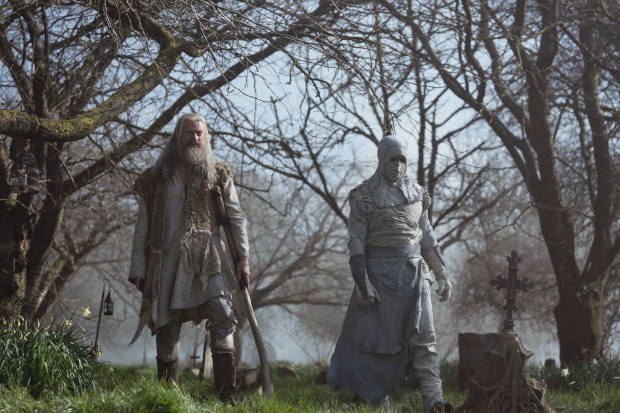
The always underrated Jodie Comer does a wonderful job at his counter point and chance at salvation. Comer has such a unique ability to never get over run by the moment in any of the films that she has been involved in and this is no different. It’s not about being a commanding presence but she commands the screen because of Jackman’s reaction to her and knowing what she means to him. He’s drawn to her but also tortured by her. Jackman and Comer being led by Sarnoski allow this to a film about the moments that are unsaid, especially in the wake of an existence that for one reason or another has been harsh on all of them.
Ultimately, The Death of Robin Hood forces us to wallow in the generational impact of trauma. While it could be labeled as a story that’s looking for redemption for this character, it’s much more that. Sometimes in these situations, redemption for the character is ultimately for him to make peace with who he is.
This Death of Robin Hood is about acknowledging that at the end of the day, all the actions we take have a cost that can’t be ignored for better or for worse. We aren’t defined by who we were but we can’t avoid that it played a huge role in forming who we ultimately are.
- Genre: Drama
- Release Date: 6/19/2026
- Directed by: Michael Sarnoski
- Starring: Hugh Jackman, Jodie Comer
- Produced by: Hugh Jackman, Michael Sarnoski
- Written by: Michael Sarnoski
- Studio: A24, Elevation Pictures