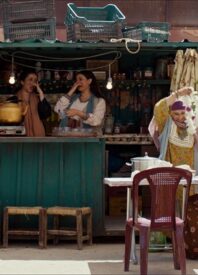
Layal (Manal Al-Maliki) laughs with one of her customers – I watched another film set in West Asia that said that laughter is resilience and it’s true with these characters. To be specific, Layal and the other characters in The Station live in a fictional version of Yemen. She runs a women only gas station. She does this in a house that she lives in long before it ends up being an area under ‘Sanadeed’ control.
The film, then, shows Layal’s midwife sister Shams (Abeer Mohammad), who is in the ‘Maghawir’ side. Both are presumably apolitical, serving as each other’s emergency lifelines. Layal needs that lifeline since the Sheik’s wife is asking for two things that she can’t give up. She can supply the Samadeed with gas and money. Or she can surrender her 12 year old brother Laith (Rashad Alrajeh) to the frontlines.
The Station‘s co-writer and director Sara Ishaq usually does documentaries, getting an Academy Award nomination for Karama Has No Walls. In transitioning from documentary to fiction, she plants a lot of Chekhov’s guns all over. It all starts with women plastering recruitment posters for ‘men’ 12 and up to sign up to take arms. And then it shows Layal waking Laith up, and the viewer knows that time’s ticking.
Despite this, Ishaq shows her eye in The Station, capturing beauty in an almost abandoned village. Trees bear flowers in front of Layal’s home / station, and yes I’ll give it a pass even if it’s ‘desert’ iconography. Shisha smoke comes out of a bar, again reminding viewers that women can have fun during wartime. There are no men and all we see are child and teen soldiers while the adult women mourn, feed each other and defend each other.

The filmmakers gave Cannes permission to publish this photo.
- Rated: Unrated
- Genre: Drama, War
- Release Date: 5/17/2026
- Directed by: Sara Ishaq
- Starring: Abeer Mohammad, Manal Al-Maliki, Rashad Alrajeh
- Produced by: Nadia Eliewat
- Written by: Nadia Eliewat, Sara Ishaq
- Studio: Georges Films, One Two Films, Screen Project