Concept design and world-building are essential components in the creation of immersive stories across film, television, video games, and other media. Concept design involves the development of visual ideas — characters, environments, props, and technologies — that define the look and feel of a project before it enters production. World building goes a step further. It weaves together these elements into a cohesive setting with its own history, culture, and logic, allowing audiences to suspend disbelief and fully engage with the narrative. It’s a difficult job, and one Ben Mauro has been doing for nearly two decades.
Mauro has worked on some of the most recognizable franchises in both film and video games. From The Hobbit, The Amazing Spider-Man 2 and Elysium to Halo Infinite and Call of Duty: Advanced Warfare, Mauro’s work is well known, and has earned him recognition for his ability to bring imaginative worlds to life . His portfolio showcases a versatility that bridges science fiction, fantasy, and realistic design, making him a sought-after concept artist in both entertainment and design circles. We had a chance to sit down with him during FanExpo in Toronto to discuss his career, and his latest project, the graphic novel Huxley.
How did you get started with your career as a concept artist?
Playing the first Halo in high school was what made me really want to take it seriously. I wondered if it was a real job. I asked myself, can I do this? How do I do this? And that led me to a 3D animation school in Seattle initially. Part of that was they made you draw a lot, and I found I really liked the design part of it more.
That led me down a rabbit hole of asking myself who are the best designers I’d love to work from and who do I want to be like? I love people like Syd Mead, Scott Robertson and Neville Page, and all these guys were teaching at a school called Art Center. It was there that I learned how to be industrial designer. Towards the end of the education, I started interning at Insomniac Games and some local game and film studios. Then I got a job at Weta workshop and moved to New Zealand to work on The Hobbit movies, Elysium and Chappie.
What kind of influence does the director or the original material play in your job?
It depends on the director. Neill [Blomkamp] always wanted to make something new. We had more free reign, and it felt like you were on something totally different. You always had to ask, what is it going to look like? There’s no frame of reference if it’s totally new. The times where it’s an adaptation, like The Amazing Spider Man 2, it was more clear cut. Here’s the comic books, make it realistic. With Peter [Jackson], because he did Lord of the Rings, he wanted something different for The Hobbit. I think it’s pretty it’s exciting, because each shop is quite different.
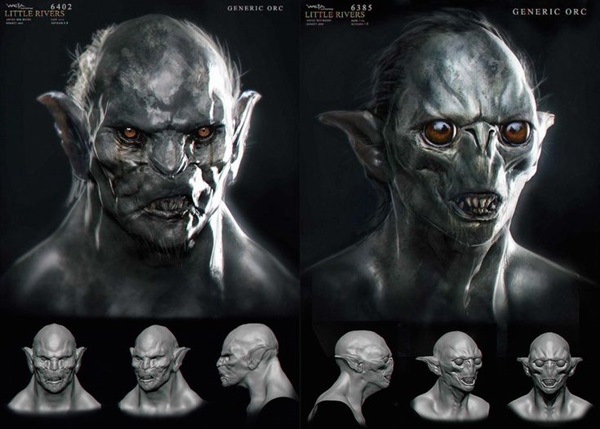
Courtesy of Ben Mauro
How did that lead into creating video games?
My early internships were mostly games. Early on, I really wanted to work in movies, especially because it felt like everything has to be built in real life. You had to have a much deeper understanding and skill level to work in movies. So it felt like movies were a much higher plateau to get into, because I wanted to learn how to do all that. But I feel like now it’s the same, or games are even a little more in depth. Now you have to design everything the player can walk around in. Everything has to be so detailed and worked out, and so the skill level for artists now has to be so high for all these jobs, it’s intimidating, but it’s exciting and always keeps you learning more.
What’s the favorite thing that you ever designed?
For movies, there’s a lot of little things I like and thought were cool. For instance, the grenade in Elysium. For a time, if you typed in science fiction grenade into Google, that was the number one result. I was like, that’s really cool. I designed the number one sci-fi grenade. I never expected that.
Where did the idea for Huxley come from?
The style was there when I was in college. I always liked sort of chunky, old world tech. I was always drawing things like this. Actually, one of the little robots walking around the market is a drawing from 20 years ago. It’s a call back to some old thing I did. I didn’t actually start making Huxley though until I did the original drawing, 11 years ago or so. For some reason, it was so strong and striking to me, and I just I had to figure out who this character was, what the story was, what the world was, and who the supporting cast of characters were.
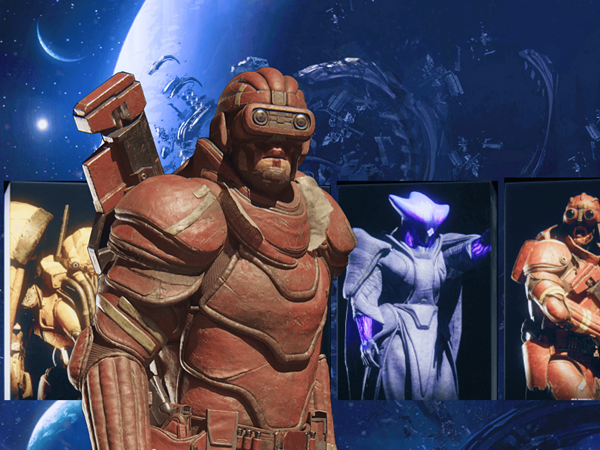
Throughout the graphic novel your colours change from reds and browns in the real world, to bright blues and white for other sequences. Was that done on purpose? Or was it a happy accident?
I was definitely thinking about. I was thinking if this was an animated film and this is the color script, is this getting too dreary and dark? Would that not be very interesting to an audience? So if there were areas I could really go vibrant, I tried to do that as much as I could.
What was it like having full control over everything, from the story to the art?
I always wanted to do something like this. It’s another part of the learning process. I wanted to go through what all my heroes went through, and you can only do that by doing it. And now I’m kind of in the opposite position, where the next book is more of a team effort. Now I am doing what some of the directors did when I was younger, and I have to guide a team. And maybe they’re thinking the same things, like, why is Ben having me draw this a certain way? I want to see certain story beats. I know what I want it to look like, trying to make the coolest story that I want to tell, and then I hope when my team grows, they’ll want to do the same thing and have cool ideas and keep passing the torch along.
Is Huxley something you hope gets adapted into a movie?
I’d love that. I’m definitely trying to expand things into as many different areas as possible. And when we have official words on anything, I’ll definitely let you know.