“Women”. – Saorsie Ronan.
To say that women comprise 30% of leading roles this year is probably generous – there’s probably an Annenberg e-mail to prove it. But it’s the job of critics to look for films that show women’s stories and talent. That’s one of the reasons why I’m coming up with this list. And this reason is nicer than the one I’ll write in a bit.
This is the meaner reason though – Bugonia is coming out soon, a vehicle starring Emma Stone. As we all know, she has two Oscars and accomplished that feat before she turned 40. A part of me is doubting that. And this list has four women who, if they wanted to, can take her place. It ain’t over until it’s over. Meryl Streep had Sophie’s Choice but she became the Boomer Highlander because of The Devil Wears Prada. Other equivalents for this, generation wise, would be Nicole Kidman with Rabbit Hole, or Katharine Hepburn with On Golden Pond. Maybe this list is coming in too early, but then better early than never. Let’s start this list with who I hope is not a controversial pick.
Kristen Stewart
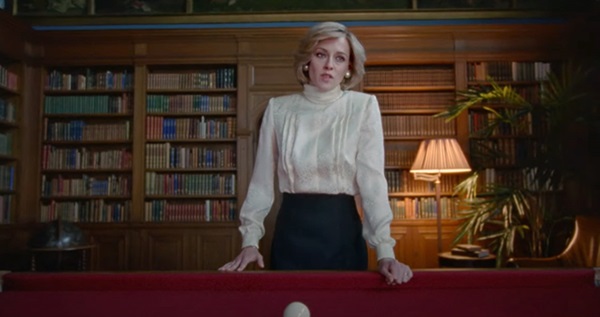
People like her now, right? The most terminally online cinephiles all saw that montage of gay nerds (same) cheering when she finally got her first nomination for Pablo Larrain’s Spencer. There, she has the daunting task of playing Princess Diana. That’s one of the films that I watched, or at least part of it, in preparation for this list, as she plays a woman whose grievances echo throughout Sandringham, one of her gilded jails. Amazing, subtle speech work on her part.
Another film I rewatched in parts for this piece is Clouds of Sils Maria. This is where the French started seeing things in her, waiting for us North Americans to catch up. Her role as Valentine, assistant to the stars, is tricky, the troubled mediator (ish) between two actresses with opposing opinions. But she lets her face show the inner turmoil of being around people with unshakable viewpoints. And because this is an Olivier Assayas film, she conveys a certain coolness that the other characters see, a facade subtly showing while something else is troubling her.
Da’Vine Joy Randolph
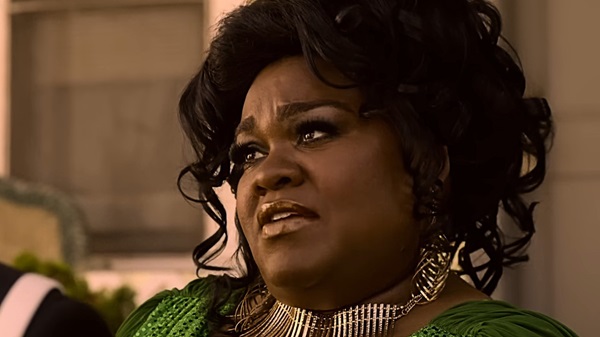
Two years ago, Da’ve Joy Randolph swept the awards season for her subtle work in The Holdovers, elevating what is otherwise a Black female trope. An awards season sweep attracts one’s share of slanderers. And I’m here, little old me, to stand on business on Randolph. Perhaps most of my goodwill towards her comes from work as Cherise. She’s the modern version in the FX remake of High Fidelity. Sometimes, all it takes if for either a woman wearing a basketball jersey or a character slandering Michael Jackson for me to like an actress and a ferocious one that steals scenes from leads.
I can write about Cherise for maybe another paragraph, or perhaps her Broadway loving cop character in Only Murders in the Building. I am not here to pick a side on the film and television debate. But I’ll humour the imaginary haters who prefer the former over the latter. The previous paragraph also has me speaking my piece on The Holdovers but her layered performance in Dolemite is My Name sticks out to me.
I remember seeing a character who learns her worth thanks to the titular Dolemite (Eddie Murphy), but repeat viewings reveal a woman who already knows her capabilities.
Cr. Courtesy of Netflix
Elizabeth Olsen
As a cinephile, I’ve been around to see the cinematic landscape change at least twice. And I can only imagine what it’s like to work in such a volatile industry. Elizabeth Olsen started out by getting bit parts in her sisters’ movies. She eventually struck out on her own during Indiewood’s third (?) boom with Martha Marcy May Marlene. Eventually, older viewers who liked grownup cinema in the early 2010s made way for comic book and franchise cinema. And that’s now dying a slow death to make way for the fourth (?) boom of Indiewood. Olsen found her niche in all of her eras and unsurprising to some, her crowning achievement is in Marvel.
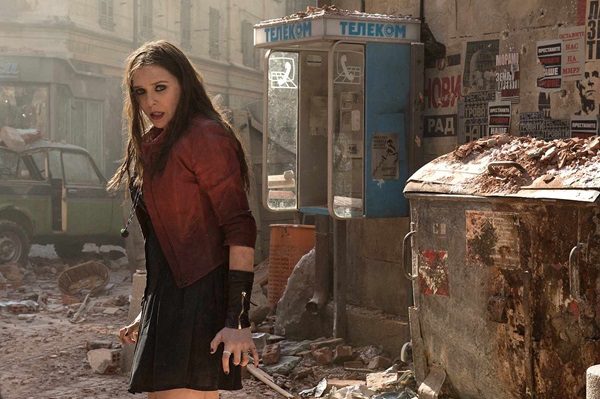
The first step in becoming a great actress is having opinions and standing up – to a certain extent – for the character they’re playing. I’m sure everyone does that, but Olsen’s strong opinions towards Wanda Maximoff reflect on the dimensions she shows within that character. She captures Wanda’s kooky side as well showing the big picture of a woman finding levity in her life. She does this despite perpetually mourning members of her family, one dying after the other. All of this is apparent in Wandavision as well as Ultron. And of course, she puts the same amount of work in Indiewood productions like Wind River. It’s inevitable that she’ll get recognition for her craft at whatever cinema throws at her.
Cr. Courtesy of Disney
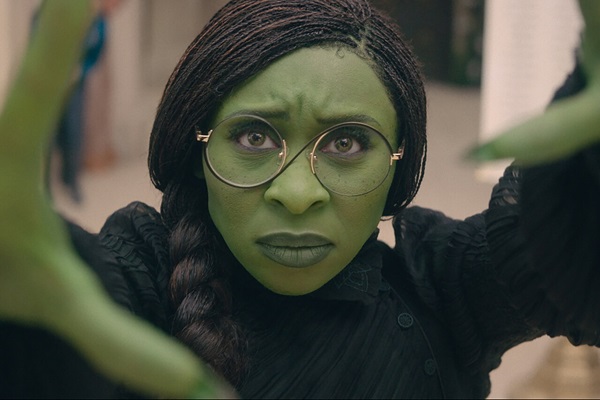
Cynthia Erivo
I read like a poseur putting her on this list because there are stage people who love her more than I do. She always tops these kinds of lists but for her work in the stage version of The Colour Purple. And could have stayed in Broadway or the West End. But unlike many stage queens of past generations, she’s swimming upstream within the stage to screen pipeline. And the last person who did that was Barbara Streisand. She goes back and forth, taking leading and supporting roles. The most notable of those supporting roles is in Steve McQueen’s Widows as a validly assertive new member of Viola Davis’ gang.
But of course, it’s time for her to take a leading role. And instead of being in the film adaptation of The Colour Purple, she chose to play Elphaba in Wicked. Her challenge is deceptively simple. She, a woman my age, in her thirties, successfully carries herself and sounds like someone who’s still in high school figuring things out. Or at least, whatever age demographic it is to be a student in the Shiz Academy of Magic or whatever. Elphaba’s response to Glinda’s fake nice interaction shows how Erivo modulates responses depending on which characters she plays. It’s indicative of the kind of talent necessary to take more leading roles like this.
Cr. Universal Pictures
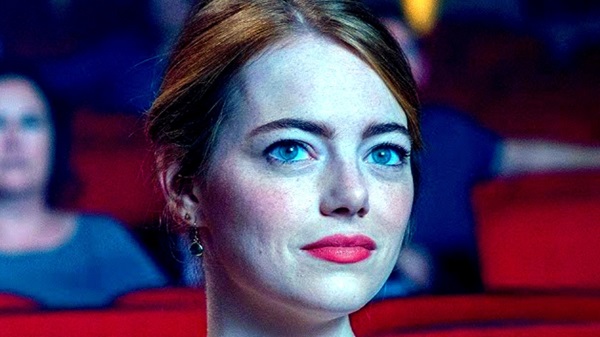
Emma Stone
Stone serves as a contrast to some of the actresses in this list. I am treating her greatness as a factual inevitability rather than a hot take. The former is actually more subject to question, at least on my part. But a quick review of her work helps for a necessary assessment. She got a nomination for La La Land.
And here comes the hot take, Stone won because she was the only deserving nominee that year. Mia is a very on brand role for her but the twist is that she sings and dances. Her ace though is her natural abilities. Her inherently expressive eyes make viewers want to watch her fall in and out of love.
After Stone’s win, she had some low key performances like playing Billie Jean King, where she showed off her accent work and movement for people who actually wanted to watch her. And after that comes her Yorgos era. Abigail, Bella Baxter, and Michelle Fuller are the kind of roles actresses her generation would kill for. And at least with Bugonia and Poor Things, she makes her face more elastic, absorbing what her scene partners give her, and relies more on her mezzo speaking voice. That voice is perfect for delivering deadpan comedy and asserting power, whichever the scene calls for. Time will only tell if she keeps this momentum but for now, she’s that girl.
- Rated: 18A, PG, R
- Genre: Action, Comedy, Drama, Romance, Science Fiction
- Directed by: Craig Brewer, Jon M. Chu, Joss Whedon, Pablo Larraín, Yorgos Lanthimos
- Starring: Cynthia Erivo, Da’Vine Joy Randolph, Elizabeth Olsen, Emma Stone, Kristen Stewart
- Produced by: John Fox, Kevin Feige, Marc Platt, Maren Ade, Yorgos Lanthimos
- Written by: Joss Whedon, Scott Alexander, Steven Knight, Tony McNamara, Winnie Holzman
- Studio: Davis Entertainment, FilmNation Entertainment, Marvel Studios, Searchlight Pictures, Universal Pictures