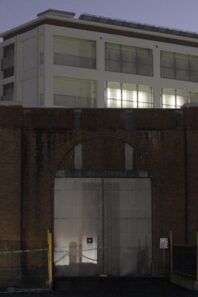
Japanese activist Makiko Watanuki reads a letter from his brother, Toshihiko Kamata, in prison for terrorism in 1971. In these letters he describes his dreams, some of them ending with him escaping a square but ending up falling in sand. There’s a vividness to this narration in the documentary about his incarceration, The 49th Year.
Director Heidrun Holzfiend provides enough context about Kamata during the beginning of the film, which treats his actions with nuance. Understandably, access to political prisoners in a centre right country is difficult outside of the narration that viewers hear. So instead, Holzfield chooses a different route – showing Japan that’s still feeling the effects of the earthquake in 2011 and COVID a decade after.
Adults take the escalator, presumably going to work, doing so in Japan’s mix of cityscapes and landscapes. Humanity and nature collide in The 49th Year as birds land on phone poles, earthquakes making abandoned roads crack. The documentary then returns to Kamata’s letters where he contemplates Hegel’s writings and how it reflects Japan.
The 49th Year‘s main cinematic thesis is that audio and visual not lining up, for reasons noted above. And equally, there’s the literalist side of me that wishes for the documentary to attack its subject more directly. It feels strange to write this, but a film that shows all of Japan seems to have limits in what it can show.
The 49th Year‘s approach may be controversial depending on how many festival goers end up seeing this documentary. Despite this, it has layers, even from the title, which I accidentally found through Googling it. It’s a reference to a Jewish tradition of canceling debts, which Kamata will never experience because Japan doesn’t want him getting released.
- Rated: Unrated
- Genre: Documentary
- Release Date: 4/28/2026
- Directed by: Heidrun Holzfeind
- Produced by: Heidrun Holzfeind, Koyo Yamashita, Mariko Mikami